Design a Single-Variable Prompt Comparison Without Inventing Results
Plan a controlled comparison and report only observations from generated outputs.
What you’ll take away
- Change one direction at a time.
- Choose a review criterion before generation.
- Do not claim results before inspection.
Define the review before the run
Choose one observable criterion before generating: for example, whether the viewer can see both hands throughout a paper-folding action. Prepare a simple score sheet with the criterion and a short note field. If another editor can review the outputs without seeing which version was intended to win, their independent observation may reveal whether the difference is clear. Record the prompt, tool, settings, and date because defaults and model versions can change.
Record observations honestly
After generation, label the files A and B, inspect both, and note what actually happened. If one output has a clearer action but also introduces a continuity error, report both. If there is no noticeable difference, say so. One pair of samples can inform the next creative choice, but cannot establish a universal claim about a prompt technique. Do not invent metrics or cite a result before running the comparison.
For more formal experiments, repeat the comparison across several prompt seeds or runs and define how outputs will be selected. Keep that separate from a quick editorial check. The useful outcome may be a narrower question for the next round rather than a winner.
Keep a small comparison record
Record the two exact prompts, generator and model name as displayed, settings, reference assets, date, and the chosen criterion. Label outputs without implying a winner. If the system changes an automatic setting between runs or selects different seeds, note that limitation. A comparison is useful when another editor can understand what was held constant and what differed.
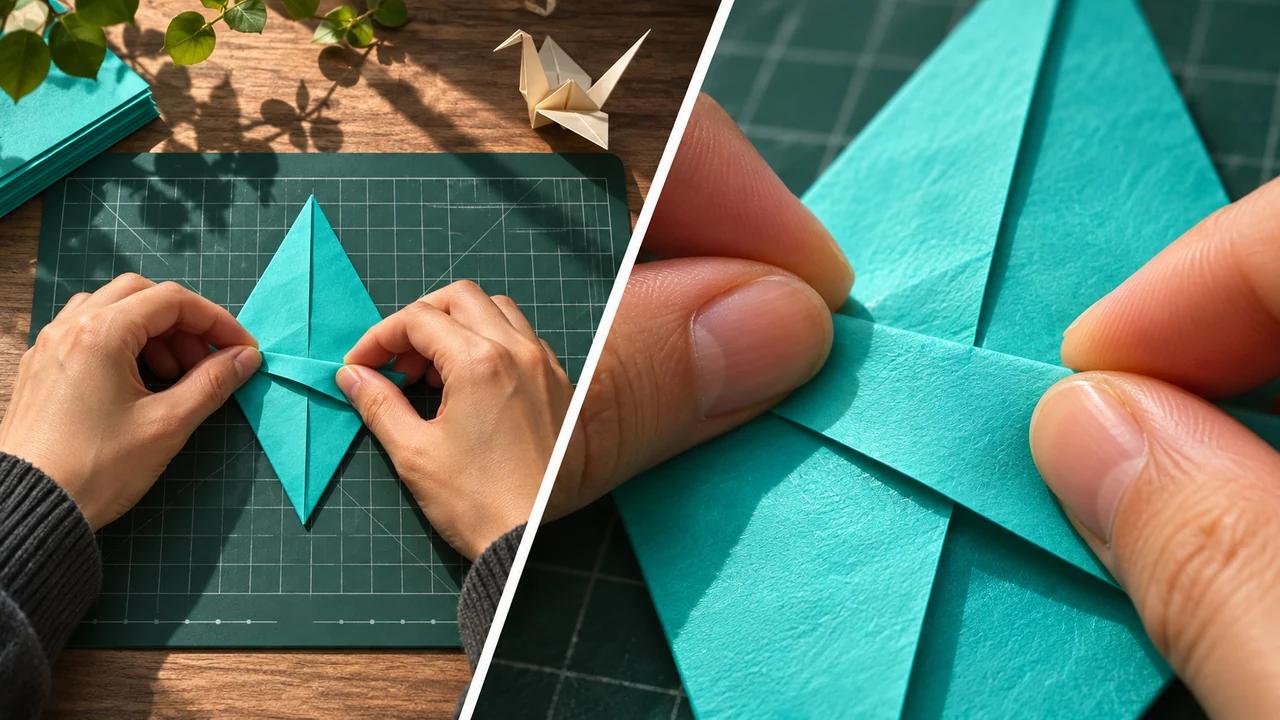
Example question: “Does a slow push-in keep the origami fold legible better than a fixed camera?” Criterion: the hands and crease remain visible through the fold. Version A and B should otherwise use identical shot direction and inputs where the tool permits. After review, write observations such as “A kept both hands in frame; B cropped the right hand near the end.” Avoid saying one camera move is generally superior based on two outputs.
If the difference is unclear, repeat the comparison or make the criterion more precise. Record that the result is inconclusive rather than inventing certainty. A thoughtful experiment can end with a better next question.
Sources & further reading
Put it into practice
- How to Write AI Image Prompts for Faceless Content
- How to Write AI Video Prompts That Produce Usable Shots