Show Scale in First-Person Video with Familiar Objects
Pair an unfamiliar subject with a known-size object in the same plane. This makes scale easier to read without vague size adjectives.
What you’ll take away
- Pair an unfamiliar subject with a known-size object in the same plane.
- Compare two frames with the same distance and a visible size reference.
Choose a familiar size reference
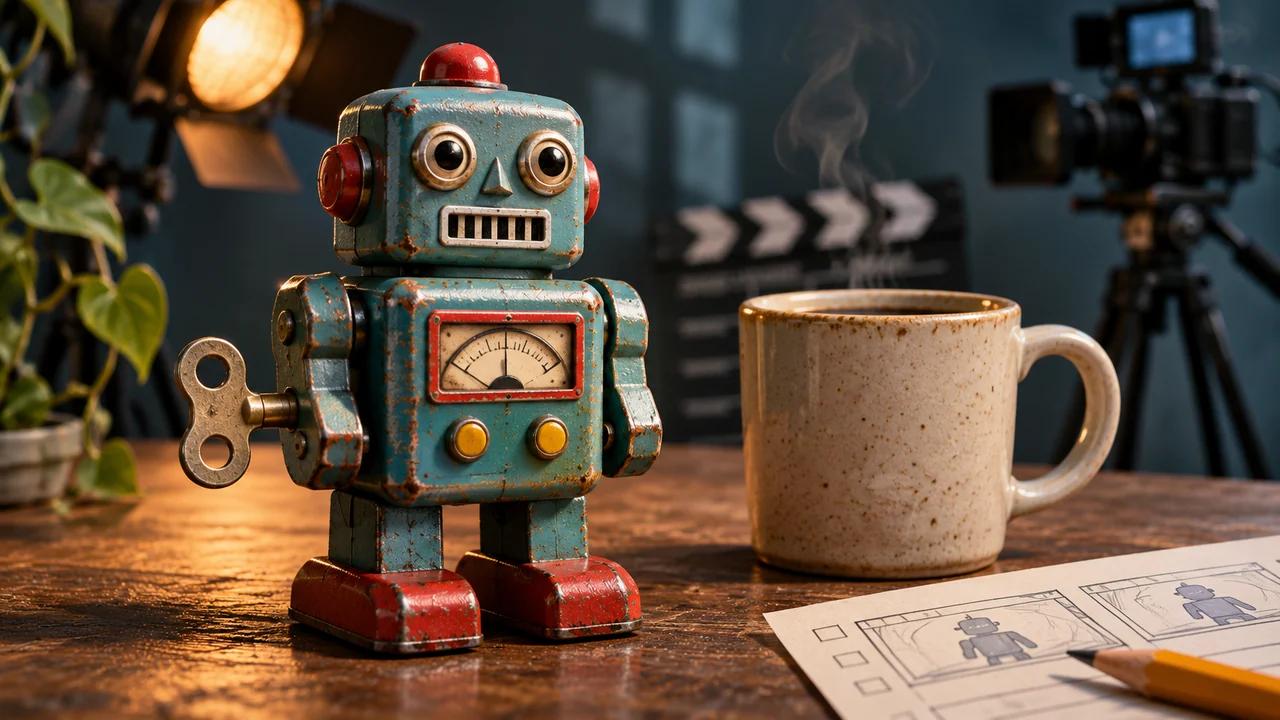
Place a familiar reference object beside the unfamiliar subject and keep them in the same plane. A palm-sized robot beside a standard mug communicates scale more clearly than “tiny.” A hand, book, doorway, or chair can work when it fits the scene. Keep both objects visible and at compatible focus. If the shot cuts to a close-up, retain the reference or re-establish it soon after so the viewer does not lose the scale.
Put both objects in the same plane
The reference object can also help compose the shot. Put a standard mug beside a tiny wind-up toy, then set the camera low enough to see both without hiding the toy behind the mug. A tabletop edge offers another stable measure. In a giant environment, a familiar door handle, chair, or human hand can reveal scale, but perspective still matters; objects farther away look smaller. State which items are adjacent and which are in the background. Avoid contradictory cues such as calling a robot palm-sized while placing it taller than the cup.
Review several frames rather than judging a single still. A model may begin with the mug in frame and then crop it out during movement. If the scale reference disappears too soon, slow the push-in or retain it in the final composition. For a sequence, reintroduce a known object before changing to a close detail. This makes each shot legible even if viewers missed an earlier frame. Reframe a vertical crop deliberately and check that the comparison survives. Keep the reference plausible within the fictional world so it does not feel like an accidental measurement prop.
Compare frames at the same distance
A useful comparison uses one subject and one scale anchor in two versions. Keep camera distance and angle similar, then compare which frame makes size legible. A hand is familiar but changes shape and pose easily; a fixed mug or book may be a steadier reference. Make the reference a natural part of the scene. If it steals attention, reduce its prominence rather than adding more props. Check scale again after reframing for vertical video, since a crop can remove the very object that explained the scene.
Sources & further reading
Put it into practice
- How to Write AI Video Prompts That Produce Usable Shots
- How to Avoid Generic, Mass-Produced AI Videos