Fix a First-Person POV Camera That Feels Like It Floats
A floating camera usually lacks footfall, weight shift, or a destination. Add a physical cause for movement and anchor the frame to height and pace.
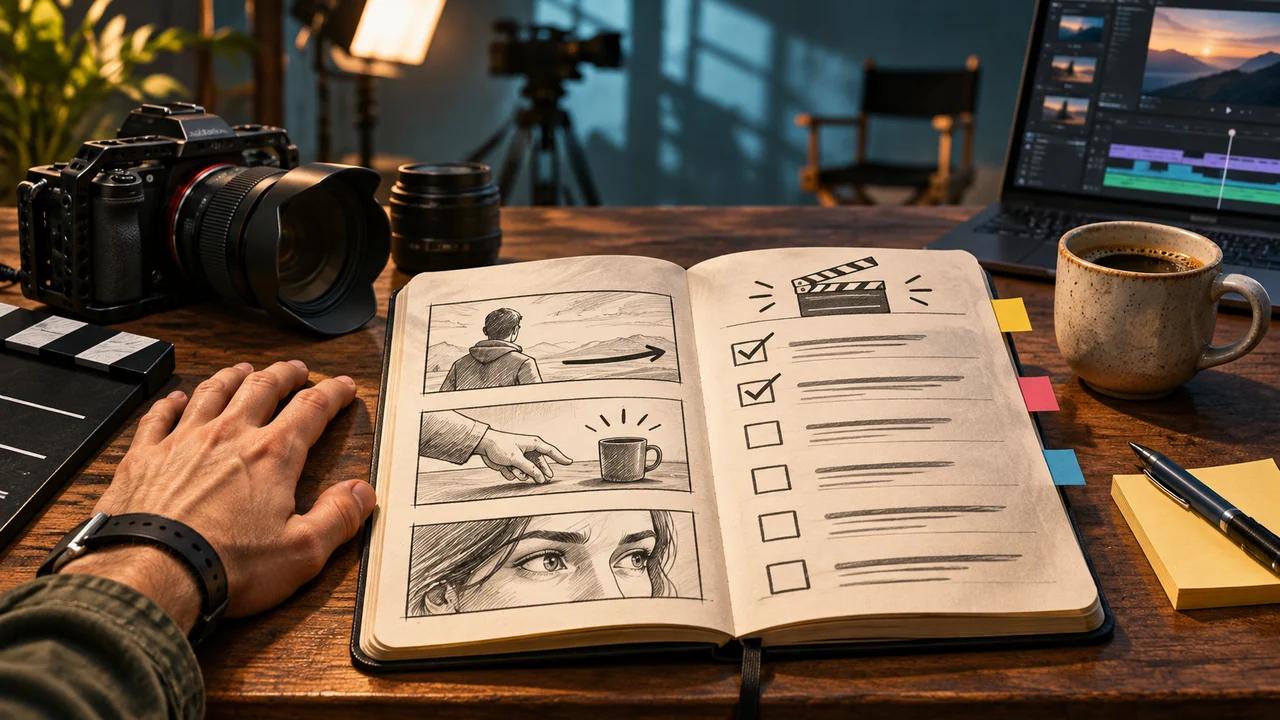
What you’ll take away
- A floating camera usually lacks footfall, weight shift, or a destination.
- Make each move come from a physical action with a clear stop.
Add a physical cause to the motion
Watch once muted and note where movement stops matching a person. Check pace, footfall, weight shift, pause, and gaze. A floating view often glides at constant speed, turns without cause, or keeps drifting after arrival. Add a destination and a hold: walk from doorway to desk, stop, then look down at a notebook. Remove competing camera moves, changing one cue per revision.
Find the moment the camera loses weight
Mark three timestamps when checking a floating shot: the first frame, the moment the viewer reaches the destination, and the final frame. If height or direction changes without a cause, narrow down where the drift begins. A stable horizon or nearby object can expose unwanted motion. Then rewrite only the relevant cue: “hold at the desk” for drift, “remain at standing height” for a vertical jump, or “turn left toward the bell” for an unmotivated pan. Avoid replacing a simple route with multiple stabilizing adjectives that compete with the action.
Some scenes should move smoothly, such as a slow look from a train window, so do not add footstep bounce by default. Ask whether the viewpoint plausibly belongs to a person in that setting. A seated passenger, person on a boat, and walker each have different motion sources. Identify those sources before adding movement cues. Keep body motion restrained and let the surrounding world provide subtle movement where appropriate. Compare the revised clip with the original, then decide whether the float is resolved or whether a shorter shot would serve the scene better.
Shorten the route and check the stop
If the float remains, shorten the shot and give it one movement goal. A short walk followed by a clear hold is easier to evaluate than a long roaming take with several turns. Stabilize one variable at a time: height first, then pace, then stopping behavior. Compare the revision with the original at the same frame, not only by overall impression. If a smooth move still looks detached from a body, describe a subtle footfall or weight shift; if those cues create excessive shake, reduce them. Keep the lens and scene direction in the prompt guide's plain language.
Sources & further reading
Put it into practice
- How to Write AI Video Prompts That Produce Usable Shots
- How to Avoid Generic, Mass-Produced AI Videos