Factory Documentary Shot List and Narration
Start with a product whose production steps can be verified. A paper notebook or ceramic mug gives you several clear on-screen transformations.
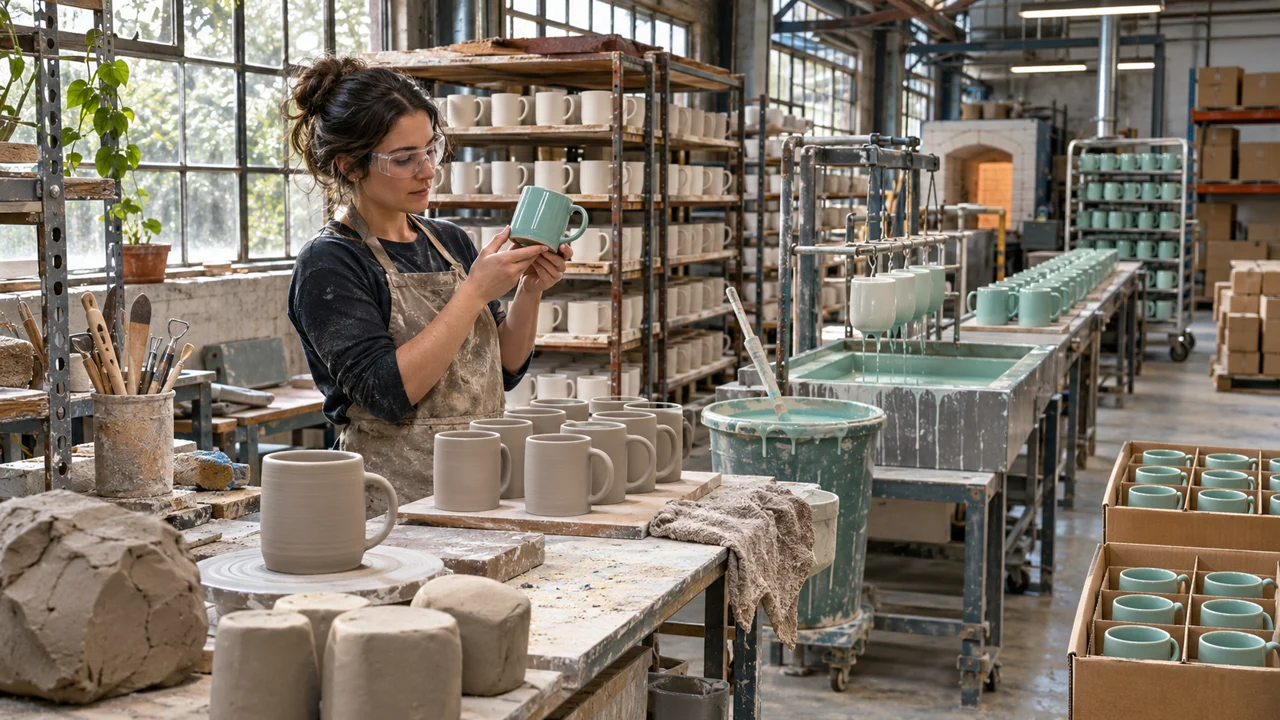
Make this prompt yours.
Plan a faceless industrial documentary from intake to dispatch.

PRODUCT: [PRODUCT]
VERIFIED SOURCE NOTES: [SOURCE NOTES]
TARGET RUNTIME: [RUNTIME]
FRAME: [ASPECT RATIO]

If the product is blank, suggest 20 varied manufacturing ideas and pick one with a visible transformation and an accessible source. Map the confirmed stages in process order. For each stage, list the incoming material, the visible operation, and the material that moves to the next station. Cover inspection, packing, and dispatch where relevant. Flag any process detail that needs checking and leave out unsourced numbers.

Turn the workflow into a timed shot list. Give each shot one self-contained generation prompt with duration, material state, machine action, camera position, lighting, and the final frame that leads into the next step. Use short shots only where the action reads clearly. State the total duration and check it against the sum of shot timings.

Keep the facility layout, machine scale, worker PPE, and product dimensions consistent. Treat generated scenes as a reconstruction and reserve readable labels and titles for editing. Add a short line of voiceover per shot, then finish with the complete continuous narration in a separate section.
Edit the full prompt
4 placeholders still unfilled
How to use it
Keep the model version, aspect ratio, and reference consistent when comparing drafts. Change one camera or lighting cue at a time so you can see what it affects.
Add specific context
Fill in the topic, audience, format, and any reference material you have. If a detail is unknown, ask your AI tool to flag it instead of inventing it.
Generate a draft
Paste the customized prompt into your chosen tool. Check which controls it supports; descriptive wording transfers more reliably than model-specific flags.
Review and refine
Check facts, remove claims you cannot support, and compare the output with your intended video. Change one detail at a time to understand what improves the result.
Keep creating
 Animal Cooking Channel Series Plan ↗
 Anime Fight — Versus Format ↗
 POV Video Idea Machine ↗
 Fusion / Transformation Morph ↗