Version Creative Prompts with an Editorial Change Log
Record what changed, why it changed, and what still awaits editorial approval.
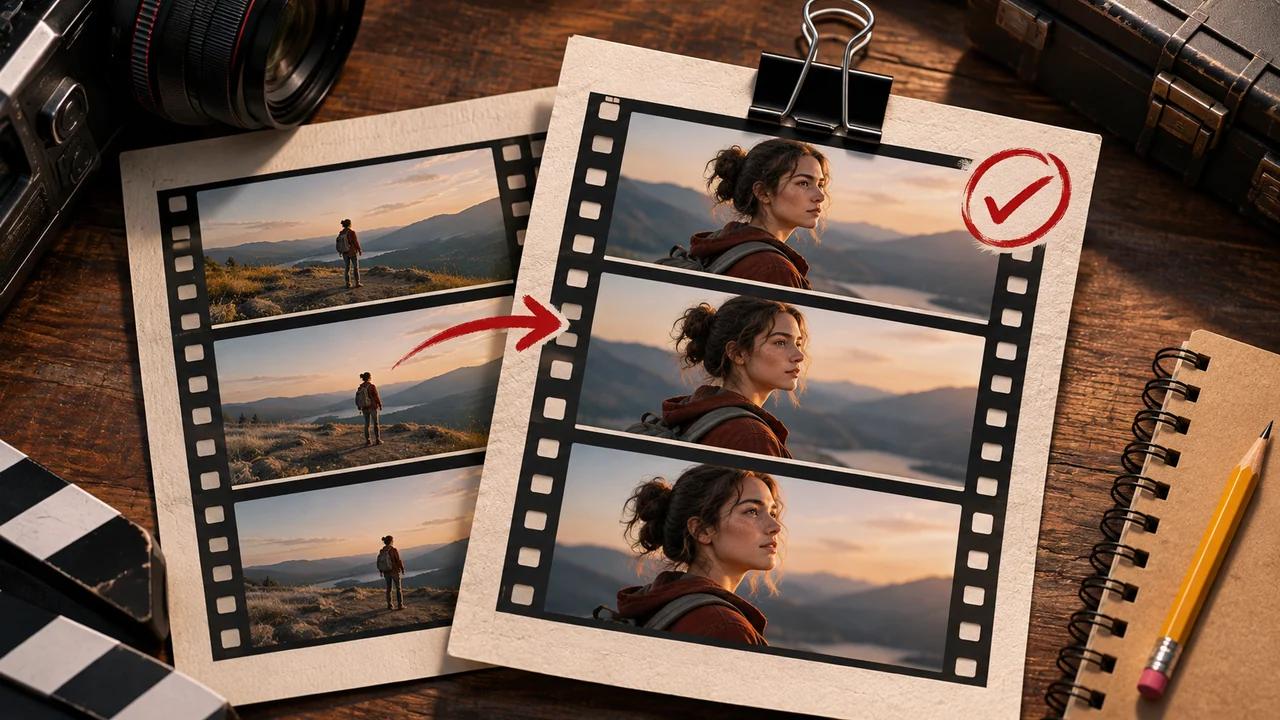
What you’ll take away
- Keep prior versions identifiable.
- Record the reason and review status.
- Separate prompt approval from clip approval.
A reusable log entry
Record: date; editor; project and shot; version; previous direction; new direction; reason; source or reference changes; review status; next owner. Example: “Nov 21, shot 04, v2: replaced handheld orbit with locked medium frame; keep the label visible for the instructional beat; approved for another generation; editor to review output.” This is a fictional example of a record, not a claim about a tested result.
If prompts contain confidential material, store the log in an approved project location and follow the team’s access rules. Avoid pasting private client data into tools without authorization. A useful change record documents creative decisions without exposing material to people who do not need it.
Keep approvals legible
Use statuses with precise meanings: draft, approved for generation, output under review, approved for edit, and final approved. A single “approved” label can create confusion about what was actually checked. Add the reviewer’s name or role and date according to the project’s recordkeeping practice. If the editor rejects a version, capture the requested revision rather than deleting the record.
For recurring content, maintain a reusable base prompt and a separate episode-specific prompt. Log changes to each independently. The base might define a narrator-free visual style and recurring character; an episode prompt describes that episode’s action and setting. This separation helps avoid changing the whole series look while fixing one scene.
Periodically archive obsolete drafts so the active version is easy to find, while retaining history where the project requires it. Never overwrite an approved prompt with an unreviewed experiment.
Avoid unhelpful change notes
“Made it better” tells the next editor nothing. “Moved to a wider framing so the handoff remains visible” connects a change to an observable need. “Changed style to cinematic” is still vague; record the specific visual treatment if it affects continuity. Keep notes factual and concise, and separate an editor’s preference from a technical limitation. This makes the history useful when a later revision needs to restore an earlier direction. A useful log preserves enough context for another editor to understand the decision months later, including which output was reviewed and who owns the next action.