Plan a Three-Part Vertical Series with Complete Episodes
Give a three-part vertical series a shared question and visual identity while making every Short useful on its own.
What you’ll take away
- Give every episode a self-contained outcome
- Connect parts with a shared visual idea
- Make the next step clear but optional
Give the series one clear promise
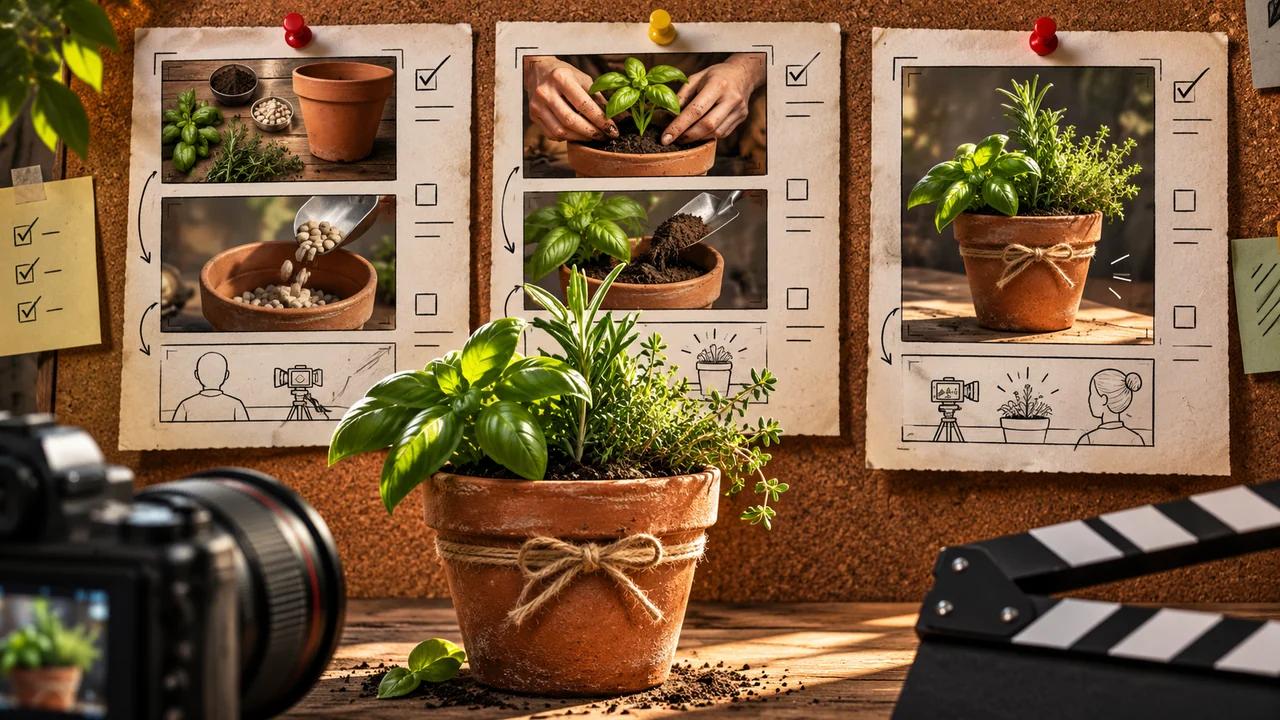
A three-part vertical series can build familiarity without asking viewers to watch in order. Choose one broad outcome, then divide it into three different questions that each have a complete answer. For a home plant series, the episodes might cover choosing a pot, preparing the soil, and checking the first week of growth. Each can stand alone, while the same workspace and visual labels make the relationship clear.
Avoid splitting one necessary explanation into three cliffhangers. A person who finds part two in the Shorts feed should not need to hunt for the opening before the advice makes sense. You can refer to the larger series, but define the object or problem again briefly in each episode.
Outline each episode separately
Write a one-sentence question for each part and a one-sentence payoff. If the answer to an episode depends on a later part, restructure it so the viewer learns something complete now. Then assign a distinct demonstration or example. Repeating the same opening and footage with a new number does not make a useful series.
Make a small planning card for each Short: opening image, action, key label, result, and optional next step. Keep the shared look to a repeated color, corner label, or tabletop. Let the subject matter and action change enough that episodes are recognizable as different lessons. Record common setup footage in one session if that saves time, but capture each specific demonstration clearly.
Connect without creating a dependency
At the end, offer a relevant next episode in a short caption or voice line. The invitation should feel optional: “Next, see how to check the soil,” rather than “You need part three to know what this means.” Where available, use a playlist or related-video feature to make continuation convenient, and verify the link in the published view.
Keep titles descriptive so each episode can appear in search or recommendations independently. A label such as “Part 2” can follow the subject, but should not replace it. Likewise, use a consistent thumbnail or cover treatment without making the three covers indistinguishable.
Before publishing, review each Short by itself and in sequence. Does each open with enough context? Does it deliver its own payoff? Does the next-episode link point to the right video? YouTube’s Shorts help page describes the current format. A series should reward viewers who watch all three, while still respecting the person who sees only one.
Sources & further reading
Put it into practice
- How to Build Content Pillars for a Faceless Channel
- A Repeatable Faceless Content Workflow: Idea to Published Video