Build a Source Log for a Narrated Historical Explainer
Track each historical narration claim to a source, page or timestamp so revisions do not sever the evidence trail.
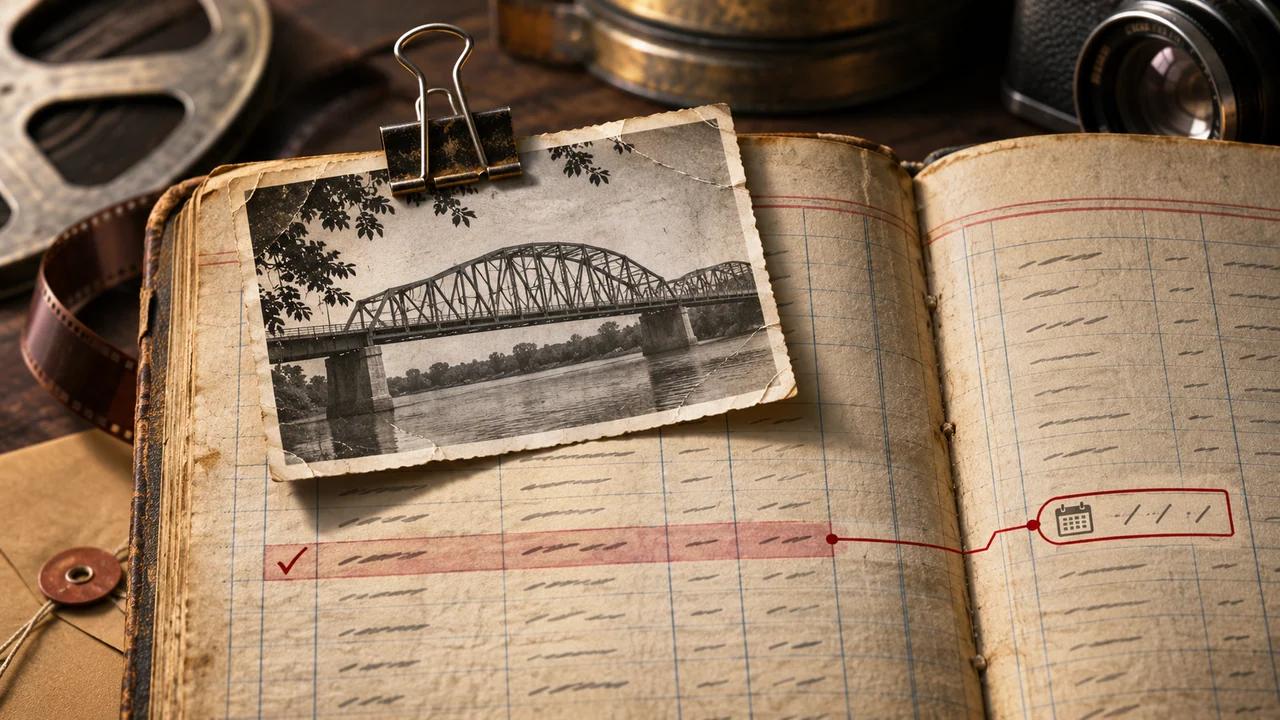
What you’ll take away
- Record one checkable claim per row
- Capture exact page or timestamp
- Recheck claims after edits
A narrated historical explainer is easier to check when every factual sentence has a traceable source. Keep a source log while researching, not after recording: it lets you find the evidence again when the script changes and makes uncertainty visible before it becomes confident narration.
Set up a claim-level record
Use one row per checkable claim. Record the draft wording, source title and author or institution, publication date if known, URL, and the exact page, section or timestamp. Add a short note explaining what the source supports and whether it is a primary record, a scholarly interpretation or an overview. These labels help you understand what kind of evidence you have; they do not automatically guarantee accuracy.
Prefer original documents for what they directly show, and use reputable historical scholarship to interpret context. An archive's catalog entry may confirm an item's date and provenance without supporting every detail in a dramatic retelling. When sources disagree, log the difference and write narration that reflects the uncertainty rather than silently choosing the most exciting version.
Keep evidence attached through edits
Give claims short IDs such as H01 and place the ID in the script or edit notes. When a sentence is rewritten, revisit its source. A tighter narration may accidentally broaden a narrow claim: evidence about one district does not necessarily describe a whole country. Record direct quotations separately and preserve their surrounding context for later review.
The Library of Congress research guides and Smithsonian Learning Lab can help locate materials, but follow each item's own citation and rights information. A search result snippet is not a substitute for checking the underlying page. Save access dates when online records may change, and keep a local citation note so the production remains understandable if a page moves.
Note gaps as well as support
If a source establishes only part of a sentence, mark the unsupported clause for research or rewrite. An explicit gap is easier for a reviewer to resolve than a vague citation attached to a whole paragraph.
Fictional example of a log entry
For a fictional lesson about a town's 1912 bridge opening, a row might contain “H03 — bridge opened in May 1912,” the town archive record's title, its URL and the dated entry's page number. Mark it “verified against dated record” only after opening and reading that record. The town and record here are invented; this example is a format demonstration, not a historical fact or source.
Before voiceover, scan for names, dates, causal claims and numbers. Confirm the locator still points to supporting material, then flag unresolved claims for revision. A source log is a working map, not a bibliography decoration. The faceless content workflow can help fit the check into a repeatable production sequence.
Sources & further reading
Put it into practice
- A Repeatable Faceless Content Workflow: Idea to Published Video
- How to Avoid Generic, Mass-Produced AI Videos